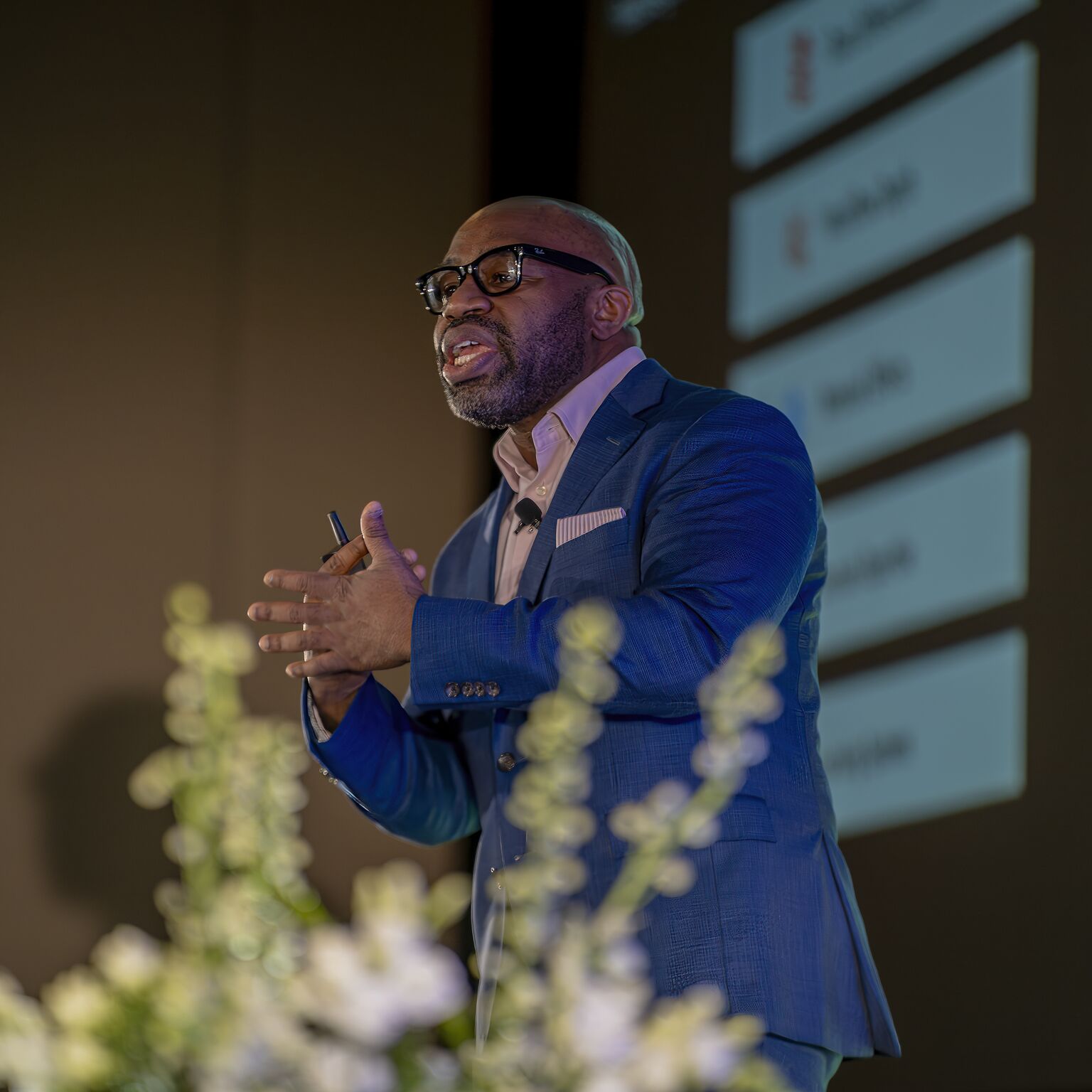
Last week I presented on building an AI-First organization at Compass, an AWS executive leadership offsite. And as an incredible bonus, I saw one of my favorite authors, Adam Grant, take the stage for a fireside chat. His core thesis: the best forecasters in the world aren’t the smartest — they’re the fastest to change their minds.
That really resonated with me. Because the same pattern applies to the AI transformation we’re experiencing. The leaders who are winning with AI are the ones who updated their mental model fastest when the first experiment failed.
Three Things That Stuck
1. Preacher, Prosecutor, Politician — the three modes that kill learning
Preacher mode: you’re selling your view. Prosecutor mode: you’re attacking theirs. Politician mode: you only hear agreement.
Adam’s alternative: think like a scientist. Treat every strategy as a hypothesis, not an identity.
2. One-way doors vs. two-way doors
Adam shared Amazon’s framework: deliberate deeply on irreversible decisions, but run fast pilots on everything else. Most AI adoption decisions are two-way doors. You can try a workflow, measure it, and abandon it in a week.
The organizations treating every AI experiment like a one-way door are the ones still “evaluating” six months later.
3. The leader must change — not just the team
Leaders are 9x more likely to be criticized for under-communicating than over-communicating. And the leaders who criticize themselves out loud get more candid feedback from their teams.
AI Adoption Is a Leadership Problem
This really resonated with how I’ve been thinking about AI adoption. AI adoption is a leadership co-evolution problem. You can’t sponsor transformation from the side. You have to demonstrate it. Show your team the successes but also the failures.
The best leaders I’ve seen don’t just approve AI initiatives — they use AI themselves, share what worked and what didn’t, and create the psychological safety for their teams to do the same.